How UK Players Can Safely Choose a Crypto Casino in 2026: A Complete Guide to Licensing, Bitcoin Payments, and Fair Play
How UK Players Can Safely Choose a Crypto Casino in 2026: A Complete Guide to Licensing, Bitcoin Payments, and Fair Play
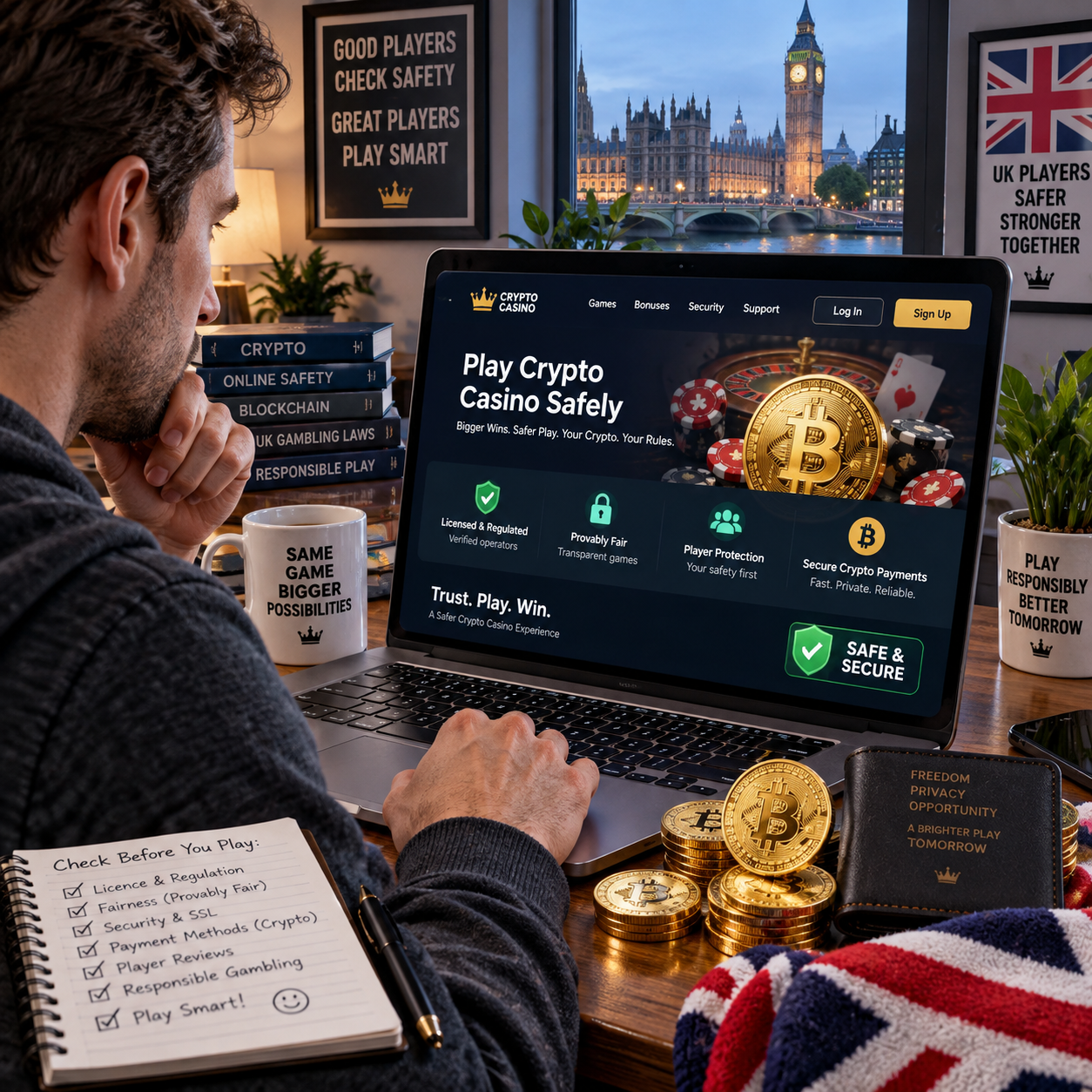
I've spent a fair bit of time this past year watching the crypto gambling scene explode across the UK, and honestly? Not hard to see why. Near-instant Bitcoin deposits, a level of privacy traditional banking simply can't touch, and the ability to actually check that a game hasn't been rigged against you — that combination pulls players in fast. I get it, I really do.
But here's what keeps nagging at me. For every legit platform doing things properly, there are several shady operators hiding behind slick websites and vague terms nobody bothers reading. If you're a UK player thinking about crypto gambling in 2026, enthusiasm alone won't cut it. You need a framework for staying safe. So that's what I want to walk you through here.
What Makes a Crypto Casino Different from Traditional Online Casinos
At its core, a crypto casino works much like any online gambling platform, except it takes cryptocurrencies like Bitcoin, Ethereum, and various stablecoins instead of — or alongside — traditional fiat. Some are built directly on blockchain infrastructure, meaning every bet, deposit, and payout can theoretically be traced and verified on a public ledger. That transparency is a big selling point, and it's a large part of why the whole space has grown the way it has.
The real differences show up in three areas: speed, anonymity, and fairness verification. Transactions that might take days through a bank can settle in minutes with crypto. Sometimes faster than that, honestly. Many platforms ask for less personal information upfront compared to traditional casinos, though this varies enormously depending on licensing — more on that shortly. And then there's provably fair technology, which lets you cryptographically check that a game's outcome wasn't manipulated. Standard RNG systems just don't offer anything comparable, not in the same accessible way.
Popular Cryptocurrencies Accepted in 2026
Walk into any decent crypto casino this year and you'll typically find Bitcoin (BTC) sitting at the top of the payment list, with Ethereum (ETH) close behind. Litecoin (LTC) still holds its ground thanks to lower fees and faster confirmations. What's changed noticeably over the past couple of years is the rise of stablecoins like USDT and USDC — UK players increasingly favour these because they sidestep the price swings Bitcoin and Ethereum are known for.
Wallet integrations have matured too. Plenty of platforms now support direct connections to MetaMask or hardware wallets rather than forcing you through an exchange first, which is a small thing but saves a surprising amount of hassle.
UK Licensing and Legal Status of Crypto Gambling
This is where things get genuinely important, so stick with me a minute. The UK Gambling Commission (UKGC) doesn't ban cryptocurrency gambling outright, but it takes a firm stance: any operator wanting to legally serve UK customers needs a UK-facing licence. And that licence comes bundled with strict requirements around anti-money laundering checks, responsible gambling tools, and financial safeguarding — regardless of whether deposits land in pounds or Bitcoin.
The tricky part? Plenty of crypto casinos operate out of jurisdictions like Curaçao or Malta without holding a UKGC licence at all, yet they still accept UK players. That sits in something of a legal grey area. Using them isn't necessarily illegal for you as a player, but you lose almost all consumer protections — no ombudsman to appeal to, no guaranteed fund safeguarding, no obligation for the operator to support GamStop or other UK safeguards.
Licensing isn't just a bureaucratic box-tick. It's the difference between having recourse when something goes wrong and being completely on your own. That distinction matters more than most players think, until it's too late to matter.
How to Verify a Casino's License
Before depositing a single satoshi, do this: search the UKGC's public register directly rather than trusting a badge slapped on the casino's homepage — those can be faked, or just... outdated. Then read the terms and conditions carefully to see which jurisdiction actually governs disputes. If that's buried in fine print and says Curaçao or some obscure offshore authority, that tells you plenty already.
Red flags include no licence number displayed anywhere, a licence number that doesn't match anything on the official register, or customer service that gets evasive the moment you ask direct questions about regulation. Simple checks, really. Ten minutes of digging beats a nasty surprise later.
Choosing a Safe and Reputable Crypto Casino
Once licensing checks out, there's a broader checklist worth running through. Look for SSL encryption on every page handling transactions — that little padlock icon matters more than most people realise. Check whether the platform has clear KYC and AML policies too.
Counterintuitively, a crypto casino with zero verification requirements is often a bigger warning sign than one that asks for ID, since it suggests the operator isn't following proper compliance standards at all. Feels backwards until you think about it for a second.
Independent reviews matter enormously here too. For UK players seeking curated reviews and safety insights before depositing funds into a crypto casino, consulting independent comparison sites can help separate reputable operators from risky newcomers. I'd always recommend cross-referencing multiple sources rather than leaning on a single glowing review — affiliate incentives can colour how platforms get described, and it's worth keeping that in mind, always.
Red Flags to Avoid
Some warning signs show up again and again across dodgy platforms: no visible licensing information anywhere on the site, withdrawal terms that are vague or buried in confusing language, customer support that's either non-existent or nearly impossible to reach, and bonus offers that sound too generous to be real. Think 500% deposit matches with wagering requirements that quietly make cashing out next to impossible.
Understanding Bitcoin Payments and Transaction Safety

Depositing with Bitcoin usually involves generating a wallet address from the casino, sending funds from your personal wallet, then waiting for network confirmations — normally a matter of minutes, though that can stretch during periods of network congestion. Withdrawals work in reverse, more or less. Transaction fees fluctuate based on network activity, so it's worth checking current gas fees or Bitcoin miner fees before moving anything sizeable.
Volatility is the elephant in the room with Bitcoin and Ethereum specifically. Your balance can shift in value between the moment you deposit and whenever you eventually withdraw — I've watched this happen mid-session more than once, and it's not a fun surprise. Not fun at all, actually. This is exactly why so many UK players have gravitated toward stablecoin options, which track the US dollar and remove that unpredictability from the equation entirely.
Setting Up a Secure Crypto Wallet for Gambling
New to this? Start by understanding the difference between custodial wallets (where an exchange holds your keys) and non-custodial wallets (where you control everything yourself). For gambling specifically, I'd suggest keeping a separate wallet dedicated purely to casino funds rather than mixing it with your long-term crypto savings.
Keeps your risk contained and your accounting far simpler — small habit, big payoff down the line. Always enable two-factor authentication, and never, ever store your seed phrase digitally where it could be compromised.
Fair Play and Provably Fair Technology Explained
Provably fair systems use cryptographic hashing to let you independently verify that a game's outcome was determined before you even placed your bet, not manipulated afterward. In practice, the casino generates a hashed 'server seed' before the round, combines it with a 'client seed' you can influence, then afterward reveals enough information for you to run the calculation yourself and confirm nothing got tampered with.
This stands in contrast to traditional RNG systems, which rely on third-party audits from bodies like eCOGRA or iTech Labs to certify fairness after the fact. Both approaches have merit, honestly, but provably fair technology gives individual players a direct, personal way to check integrity rather than trusting an external certificate alone. That's a big part of why it's resonated so strongly within the crypto gambling community.
Responsible Gambling in the Crypto Space
UK players have access to tools like GamStop and mandatory deposit limits through licensed operators, but crypto's pseudo-anonymous nature creates real friction here. Unlicensed offshore crypto casinos often don't integrate with GamStop at all, which means someone who's self-excluded through traditional channels could theoretically still access crypto platforms unimpeded. Not great, to put it mildly.
Reputable, properly licensed crypto casinos are increasingly building in self-exclusion tools, deposit caps, and reality checks to bridge this gap — but the honest truth is enforcement remains inconsistent across the industry. Choosing licensed platforms isn't just about fairness. It's about making sure these safeguards actually exist in the first place.
Common Mistakes UK Players Make with Crypto Casinos
The mistakes I see repeated most often: skipping licence verification entirely because a site looks polished, storing gambling funds in unsecured or shared wallets, misunderstanding how wagering requirements apply differently to crypto bonuses versus fiat ones, and diving in without checking withdrawal limits until they've already won and can't access their own money smoothly.
Each one's entirely avoidable with about ten minutes of research beforehand. Ten minutes. That's genuinely it.
So, staying safe in the UK crypto casino space in 2026 really comes down to three pillars: verifying proper licensing before you deposit a single coin, handling your Bitcoin transactions through secure, dedicated wallets, and understanding how provably fair technology lets you personally check that games are legitimate. None of this requires technical expertise — just a willingness to spend a little time researching before you play. Prioritise transparency, regulatory compliance, and independent reviews over flashy bonuses, and you'll end up in a far stronger position than most players who jump in headfirst.